Scope 1 and 2 emissions from the bills you already have
Scope 1 is what you burn or release yourself; Scope 2 is the energy you buy. Emissa turns gas, fuel, refrigerant and electricity records into an auditable ledger — with Scope 2 reported both location-based and market-based, and every figure traceable to its bill.
Bills in, ledger lines out
The paperwork you already have
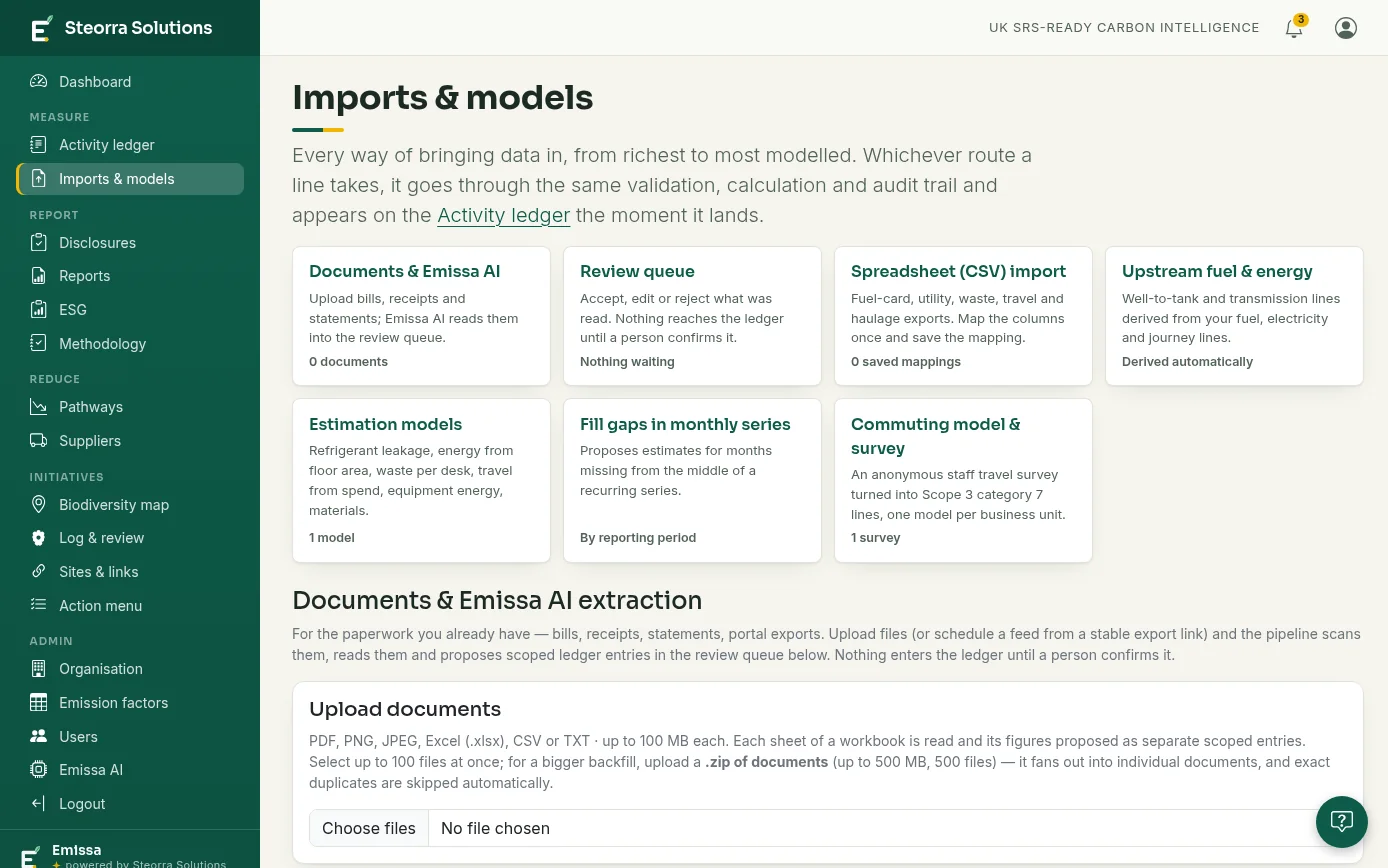
- Upload energy and fuel bills as they are. Emissa AI reads each document and proposes one ledger line per activity — a dual-fuel bill becomes an electricity line and a gas line — with its reasoning and confidence.
- A person confirms every line. Nothing enters the ledger until someone accepts it, and the bill stays attached to the line it produced.
- Spreadsheet exports, mapped once. Meter readings and fuel-card statements import through saved column mappings, with the same validation as everything else.
Electricity reported both ways
The GHG Protocol's Scope 2 guidance asks for purchased electricity to be reported location-based and market-based. Emissa calculates both from the same line.
Location-based, always
Every electricity line is calculated against the grid factor for the year it is dated in. Dashboard headline totals use location-based Scope 2.
Market-based, when you have it
Set a market-based factor, such as your supplier's tariff or a residual mix, and the line carries a second, market-based result.
Both in every report
PDF and Word reports show Scope 2 location-based and market-based side by side.
The right grid for each country
Add a country's published electricity factor with its source once, and bills for sites in that country take it automatically.
Sites without bills
The energy-from-floor-area and equipment energy models estimate what is not metered, with the assumptions and their source on every line.
Intensity ratios
Record revenue, headcount or floor area for a period and reports include intensity ratios — SECR asks for at least one.
Fuels, fleet and refrigerants
Direct emissions, with the working shown
- Gas, oil and other fuels calculated against the official Defra factor for the year each bill is dated in.
- Company vehicles by fuel used or by distance driven, against the matching factor.
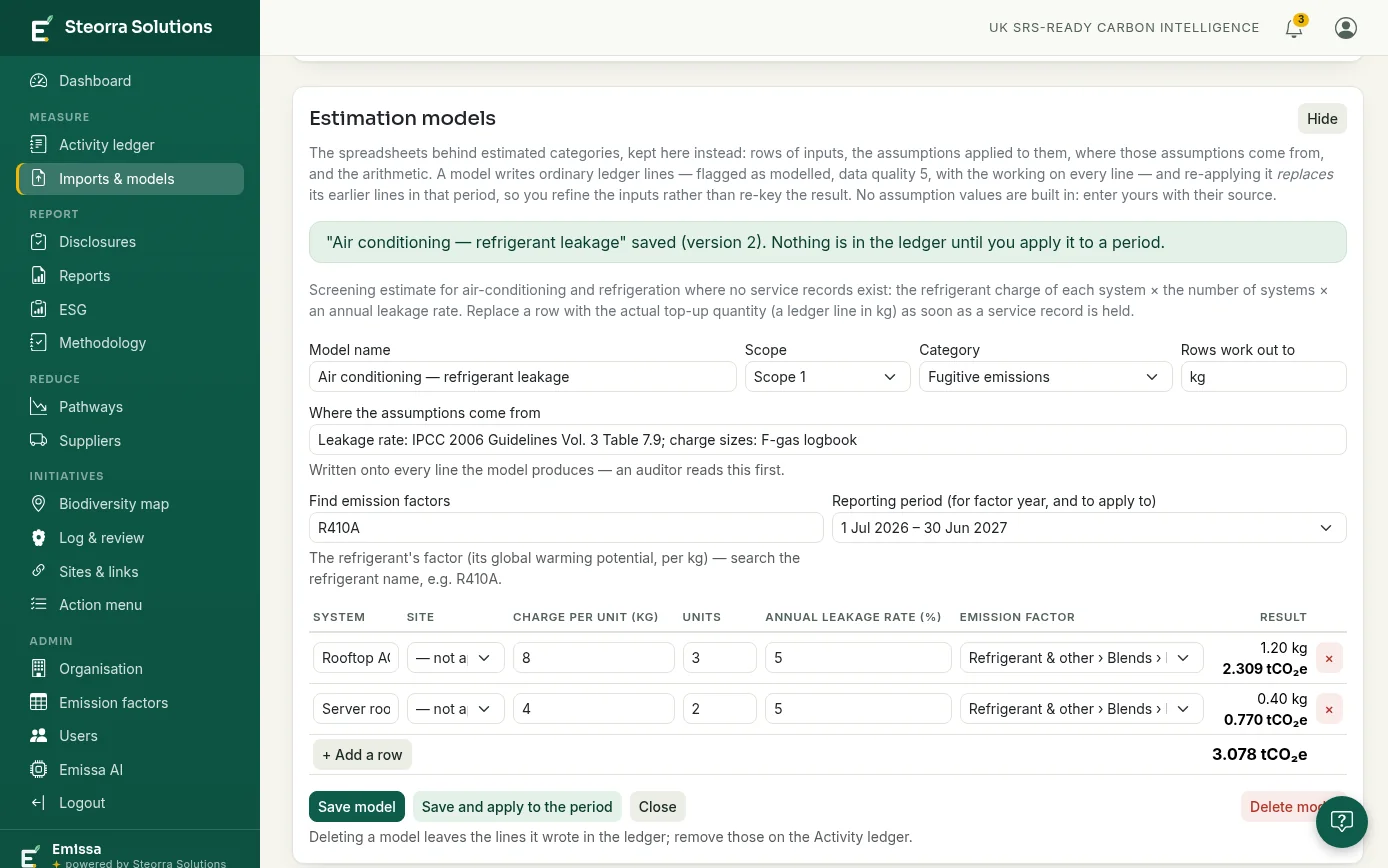
- Refrigerant leakage from a model, not a guess. Charge, number of units and leakage rate on each row, multiplied by the refrigerant's factor — previewed as tCO₂e before anything is saved, with the assumptions and their source written onto every line.
Well-to-tank and grid losses, derived exactly
Each fuel and electricity line derives its Scope 3 category 3 lines — well-to-tank and, for electricity, transmission and distribution losses — from the same quantity against the upstream factor in the same dataset and year. Not an average percentage uplift. Edit or delete the source line and they follow.
Common questions
What are Scope 1 and Scope 2 emissions?
Scope 1 is direct emissions from sources you own or control, such as gas boilers, company vehicles and refrigerant leaks. Scope 2 is indirect emissions from the electricity, heat and steam you buy.
How does Emissa collect Scope 1 and 2 data?
Upload the bills and statements you already have. Emissa AI reads each one and proposes a ledger line per activity with its reasoning and confidence, and nothing enters the ledger until a person confirms it. Spreadsheet exports can be imported with saved column mappings.
Does Emissa report Scope 2 location-based and market-based?
Yes. Every electricity line is calculated location-based, and also market-based when a market-based factor such as a supplier tariff or residual mix is set. Reports show both; dashboard headline totals use location-based Scope 2.
Which emission factors are used?
The official UK Government (Defra) conversion factors for the year each activity is dated in. Sites outside the UK can take their country's published electricity factor, added once with its source.
How are refrigerant leaks estimated?
With the refrigerant leakage model: charge, number of units and leakage rate on each row, multiplied by the refrigerant's factor. The assumptions and their source are written onto every line it produces.
Are well-to-tank and transmission losses included?
Yes, as Scope 3 category 3. Each fuel and electricity line derives its upstream lines from the same quantity against the upstream factor in the same dataset. Edit or delete the source line and they follow.
More of the platform
Scope 3 emissions
All fifteen categories, from supplier data, spend, travel and surveys — with the working on every line.
UK SRS reporting
A disclosure workbook on the four pillars, filled from the ledger, with reports and an audit pack.
Defra conversion factors
Each annual gov.uk release imported automatically and applied to activity dated in its own year.
Carbon audit trail
Every figure walked back to its factor version, calculation trace and source document.
Biodiversity initiatives
Site-by-site actions on one map, linked into pollinator highways and reported by client or region.
The whole platform
Measure, report and reduce: how the ledger, the methodology statement and the models fit together.
See it with your own data
A demo takes half an hour — bring a handful of real bills and watch them become an auditable ledger.
Book a demo